

- This event has passed.
Sub-city Tobacco Control Integration Workshops with Arada, Lideta, Kirkos, Gullele, and Kolfe-Keranio Sub-cities Cabinets, in Addis Ababa
April 6 @ 8:00 am - April 8 @ 5:00 pm
Meqoamia Community Development Organization (MCDO) News
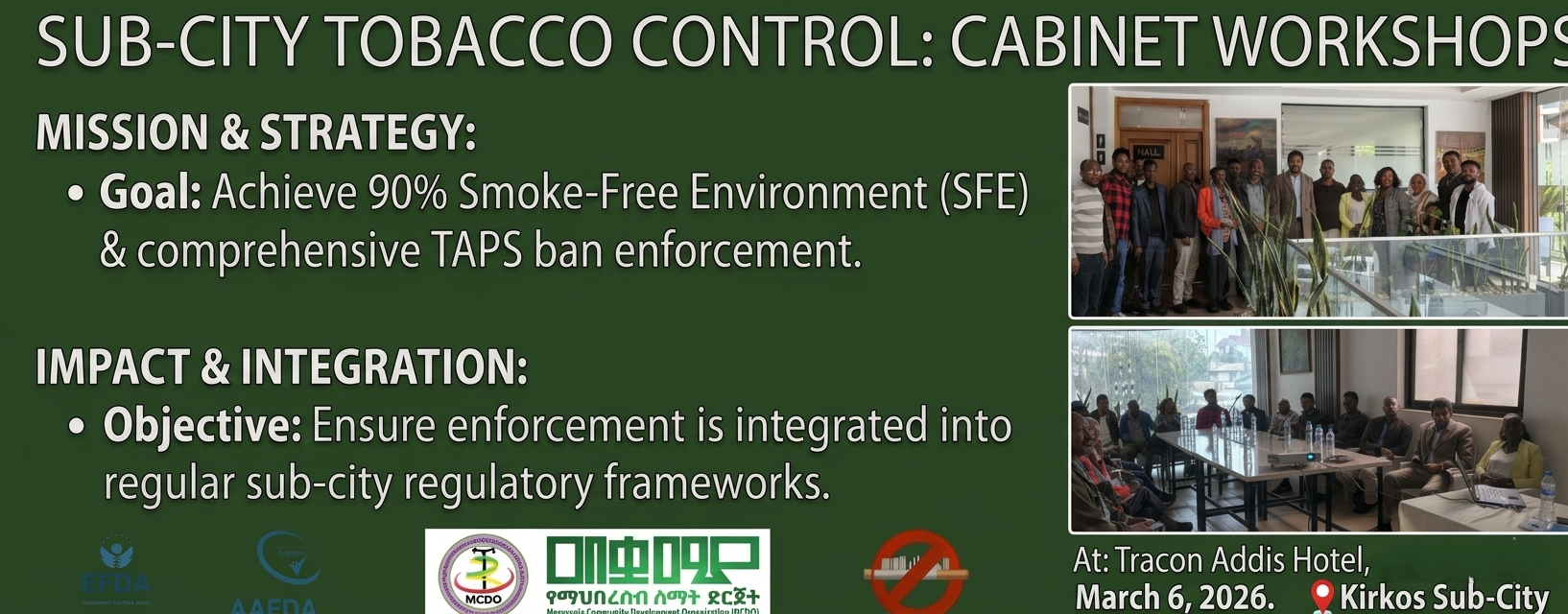
Tracon Addis Hotel, Addis Ababa March 6, 2026 Kirkos Sub-City
As part of the project titled “Support the achievement of 90% compliance with Smoke-Free Environment (SFE) regulations and effective enforcement of Tobacco Advertising, Promotion, and Sponsorship (TAPS) bans in Addis Ababa,” Meqoamia Community Development Organization (MCDO) conducted Sub-city Tobacco Control Integration Workshops with cabinet members of Arada, Lideta, Kirkos, Gullele, and Kolfe-Keranio sub-cities. These workshops were organized under Strategy 1.1, which aims to strengthen political engagement and administrative commitment for integrating tobacco control measures into local governance systems.
The workshops brought together sub-city cabinet members, representatives from the Addis Ababa Food and Drug Authority (AAFDA), enforcement bodies, health officials, and other relevant stakeholders. The primary objective of the sessions was to strengthen understanding of Ethiopia’s Food and Medicine Administration Proclamation No. 1112/2019 and its provisions related to 100% Smoke-Free Environments (SFE) and the comprehensive ban on Tobacco Advertising, Promotion, and Sponsorship (TAPS). Participants discussed the current status of tobacco control implementation within their respective sub-cities and identified existing enforcement gaps, particularly in hospitality venues such as bars, restaurants, nightclubs, and lounges. During the workshops, participants collaboratively mapped enforcement responsibilities among sub-city departments and designated focal persons responsible for coordinating tobacco control activities at the local level. Emphasis was placed on aligning SFE and TAPS enforcement with existing sub-city inspection and regulatory systems, including routine inspections carried out by code enforcement teams, health inspectors, and other municipal regulatory units. This integration approach was designed to ensure that tobacco control enforcement becomes part of the regular administrative and regulatory framework rather than a stand-alone activity.