
Adiss Ababa, Ethiopia, MCDO
Currently, alcohol use and its related health complications are a growing global concern. According to recent data from the World Health Organization (WHO), alcohol is a major factor that impacts mental health far beyond just physical damage.
The Scientific Impact of Alcohol on the Brain
Alcohol interferes with the brain’s communication pathways and affects the balance of neurotransmitters. Although many use it for temporary relaxation, scientifically, alcohol is classified as a “depressant.”
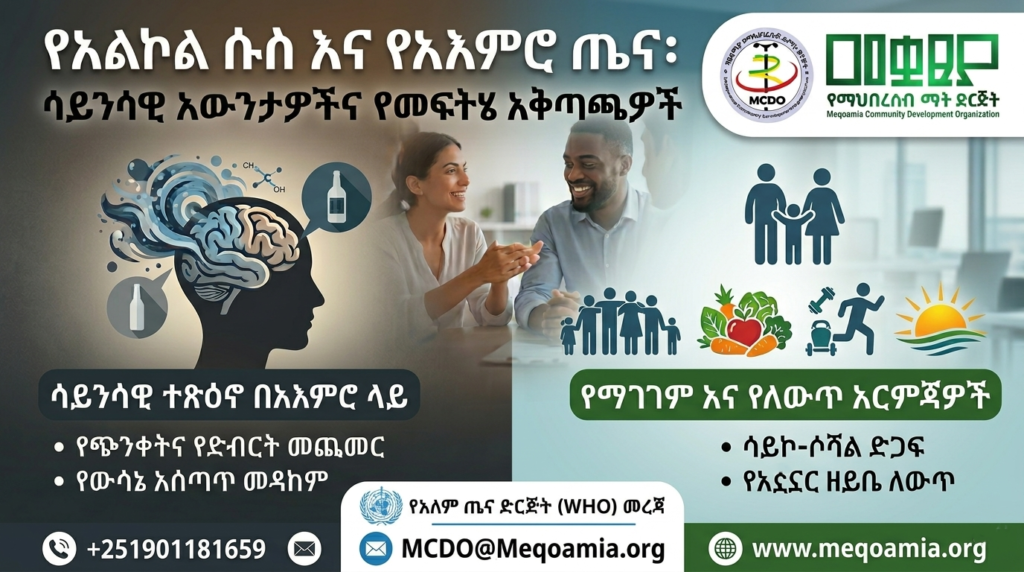
- Increased Anxiety and Depression: By altering serotonin levels in the brain, alcohol can significantly increase the risk of depression and long-term anxiety.
- Impaired Decision-Making: Alcohol weakens the prefrontal cortex—the area of the brain responsible for rational thinking—making it harder for individuals to maintain self-control.
Insights from the World Health Organization (WHO)
The WHO Global Status Report indicates that alcohol use is a causal factor in more than 200 disease and injury conditions. To combat this, the WHO introduced the “SAFER” strategy, providing evidence-based guidelines for communities to reduce alcohol-related harm.
Key Findings:
- Millions of lives are lost annually due to alcohol-related health issues.
- Excessive consumption is a primary risk factor for non-communicable diseases like heart disease and various cancers.
- Early alcohol use in youth is directly linked to disrupted brain development.
Steps Toward Recovery and Change
Moving away from addiction and restoring mental health requires following evidence-based practices:
- Psychosocial Support: Group discussions and professional coaching significantly increase the chances of long-term recovery.
- Lifestyle Optimization: Quality sleep, balanced nutrition, and physical activity help brain chemistry return to a healthy state.
- Community Engagement: Prevention is not just an individual effort; community support and awareness are vital.
Conclusion
Preventing and managing alcohol addiction begins with an awareness rooted in scientific facts. By utilizing these evidence-based insights, we are committed to helping our community stay addiction-free and build better mental resilience.
References:
- World Health Organization (WHO) – Global Status Report on Alcohol and Health.
- WHO Fact Sheets on Alcohol and Mental Health.
- The SAFER Technical Package (WHO).
Elias Kalayu